SysInfo is an application for Motorola 680x0 based Classic Amiga and is used for getting information about the system like OS and library versions, hardware revisions and stuff.
Exactly 19 years after version 3.24 of SysInfo it's time for an update! The original author Nic Wilson has kindly given me permission to continue the maintenance of this old classic.
A
If you want information when new versions of SysInfo is available, please subscribe here.
Download latest Beta or Release Candidate here, please report bugs and feature requests:
The benchmark results provided by SysInfo is currently not verified on M68060 Amigas and useless in emulators set up to emulate faster than early classic amigas!
Two reports of 1 MB ECS Agnus (NTSC 8372A) identified as a 2 MB Agnus.
When using tools to rearrange windows, "dialogs" can be put behind the main window.
In WinUAE, when enabling "Fast as possible" & JIT it craches after Speed test when scrolling the libraries list.
I want more bug reports! Mail it to SysInfo (at) d0.se or use the contact form.
Changed handling of speed numbers, if big, don't print decimals
Replaced "Chip Speed vs A600" algoritm to use a lot less instructions and a lot more CHIP mem accesses resulting in a more relevant value. This results in significantly lower value for machines with instruction cache (68020+), which is more accurate because instruction cache should not affect CHIPMEM access speed.
Added support for AC68080 frequenc support
Update will no longer try to open 68040/68060.library when there is no such CPU
Bugfix: 68040/68060 non FPU guru fixed, again!
Lots of updates/corrections in the SysInfo.guide documentation.
The DRIVES/SCSI function was not 'Close'ing each drive that it 'Open'ed after the function was finished.
Tambaoga Mwanangu Pdf Download 2021 -
I should also be cautious about potential misinformation. If "Tambaoga Mwanangu" is a lesser-known text, there's a chance the user is referring to a locally circulated document, which might not be available online. In that case, directing them to local resources or communities would be more effective. Finally, summarizing the steps to legally obtain the document and emphasizing the importance of official sources would be the best approach in the response.
Next, I should check if "Tambaoga Mwanangu" is a known title. Maybe it's a religious book, like a prayer card or a guide for personal reflection. Since Swahili is widely used in religious contexts in East Africa, it could be a Christian book intended for personal or group use. Alternatively, it might be a cultural educational material. tambaoga mwanangu pdf download
Another angle is that the user might not know the exact source, so I should clarify if they're referring to a specific text. If it's not a well-known publication, the user might need to verify the title's accuracy or reach out to community groups for assistance. Additionally, explaining how to search for such documents using Swahili keywords could be helpful. I should also be cautious about potential misinformation
I need to consider possible sources where such a document might be available. Religious publications in Swahili, especially from churches in Tanzania or Kenya, often produce PDFs or printed materials. The user might have heard about it through a church or social media. Since direct downloads might require proper channels, I should advise them to check official websites or contact local religious institutions for authentic copies. Also, ensuring that the user respects copyright laws is important, so suggesting legal avenues is key. Finally, summarizing the steps to legally obtain the


 APPS
APPS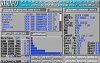
 download