F6flpyx64 Intelr Vmdzip 12th Gen Top Work -

Compatibility:

f6flpyx64 intelr vmdzip 12th gen top

OptiFDTD

70 MB

Below are popular user links:

FDTD Publications
FDTD Videos
FDTD Features
FDTD Tutorials

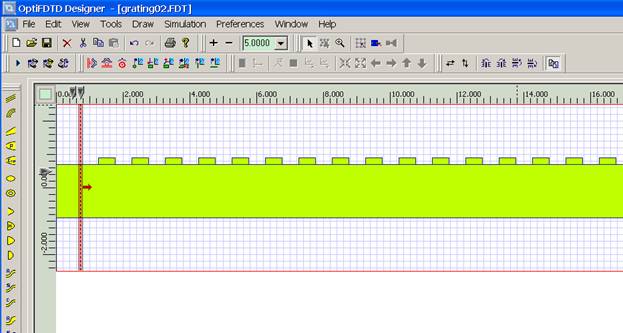
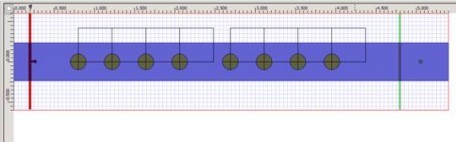
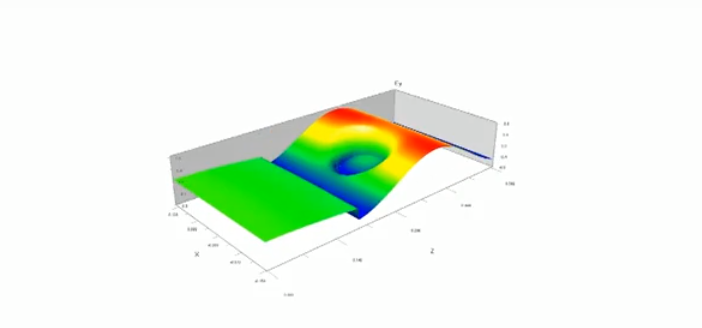
OptiFDTD enables you to design, analyze and test modern passive and nonlinear photonic components for wave propagation, scattering, reflection, diffraction, polarization and nonlinear phenomena. The core program of OptiFDTD is based on the Finite-Difference Time-Domain (FDTD) algorithm with second-order numerical accuracy and the most advanced boundary conditions – Uniaxial Perfectly Matched Layer (UPML).

The algorithm solves both electric and magnetic fields in temporal and spatial domain using the full-vector differential form of Maxwell’s coupled curl equations. This allows for arbitrary model geometries and places no restriction on the material properties of the devices.

Applications

  • Surface Plasmon Resonance (SPR)
  • Photonic band gap materials and devices
  • Nano-particles, and tissue cells
  • Diffractive micro-optics elements and lenses
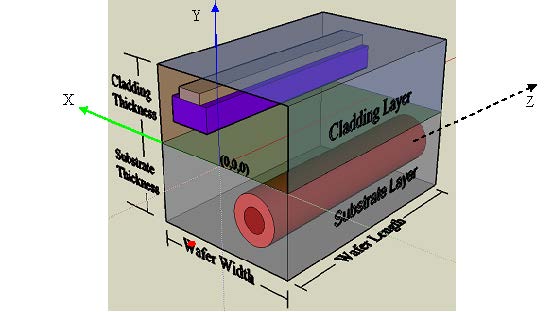
  • Complex integrated optics structures
  • Nonlinear materials, dispersive materials
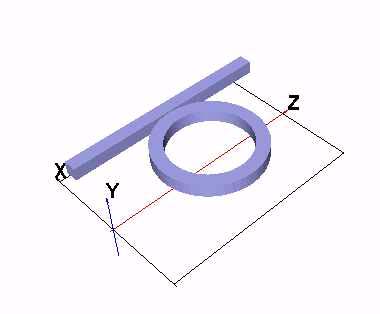
  • Optical micro-ring filters and resonators
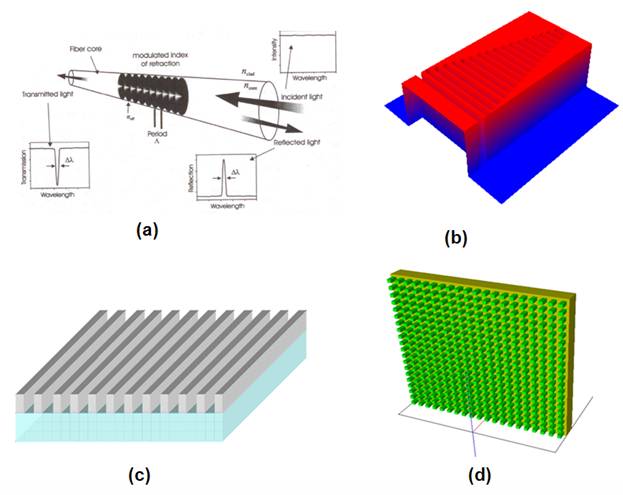
  • Grating based waveguide structures
  • Electromagnetic phenomena


Interface with Popular DesignTools
  • Code V
  • Zemax

Feel free to browse our FDTD gallery (click to enlarge):
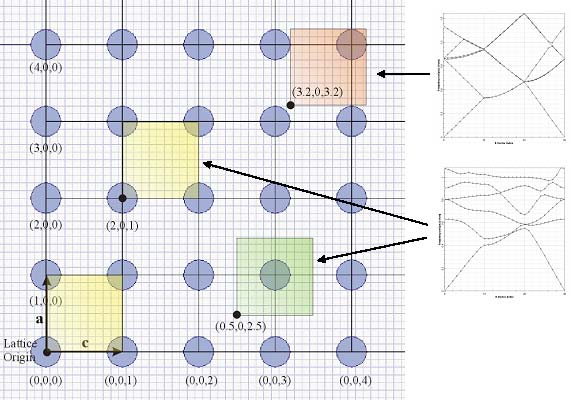
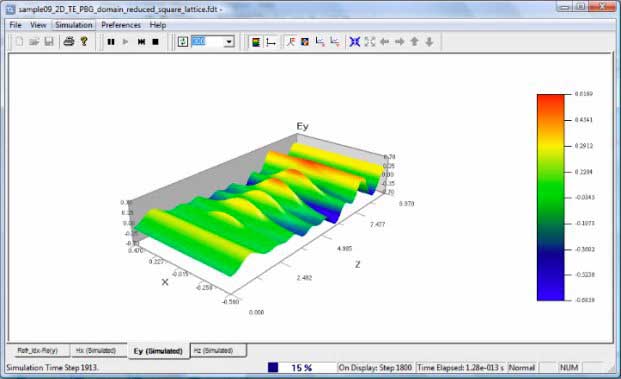
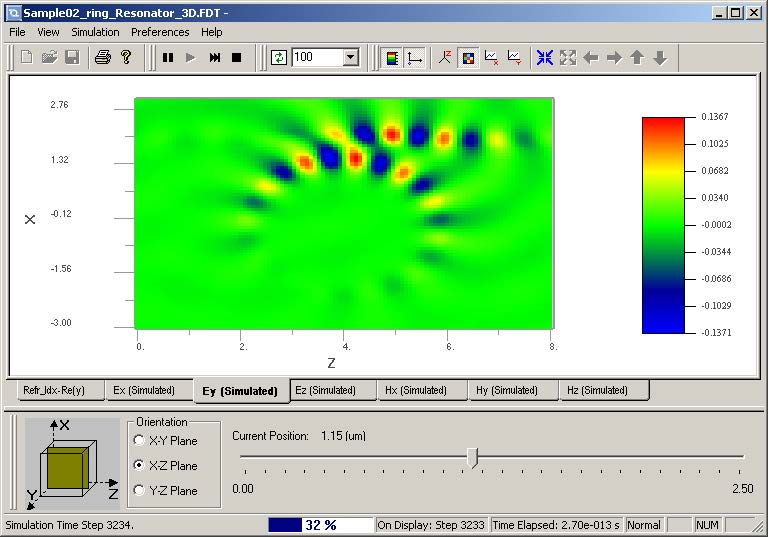
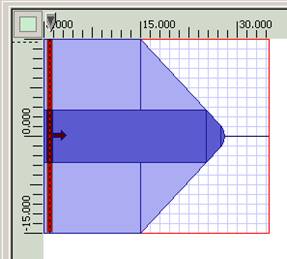
     FDTD - Figure 3 Inversion Symmetry and Domain Origin FDTD - 3D Wave propagation

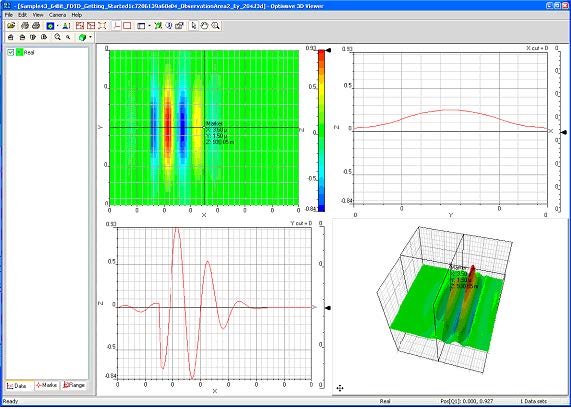
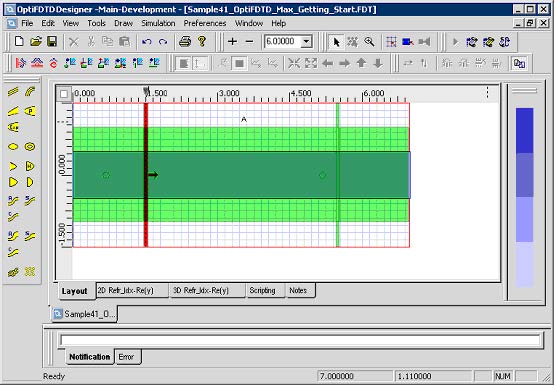
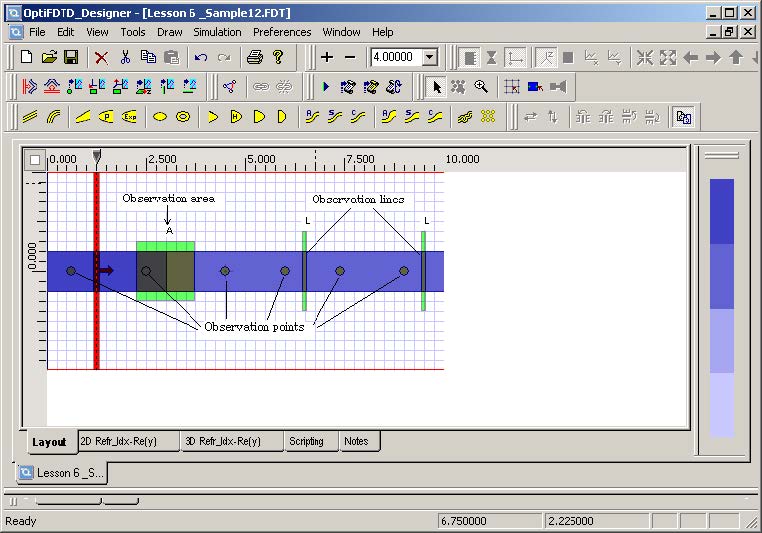
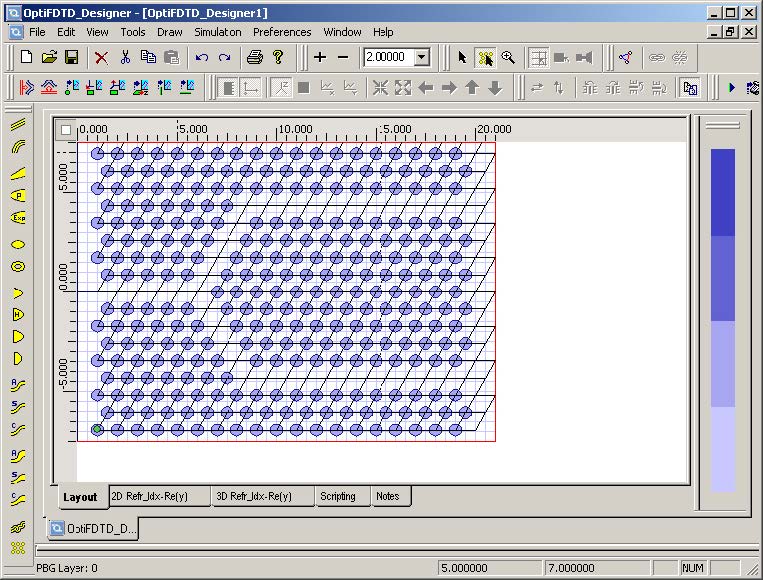
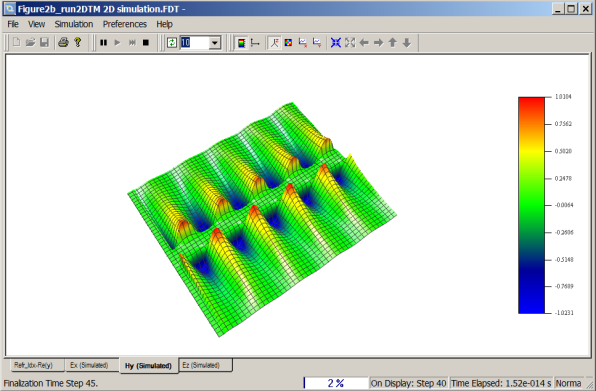
FDTD - Figure 8 The time domain snapshot observed in 3D Viewer from observation area 2FDTD - Figure 5 Layout

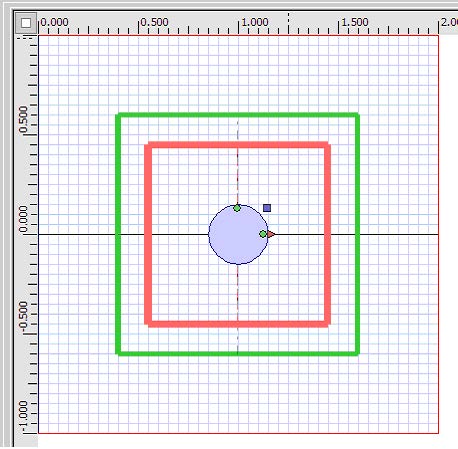
FDTD - Figure 16 Elliptic waveguide in the TFSF regionFDTD - Figure 2 Layout in OptiFDTD

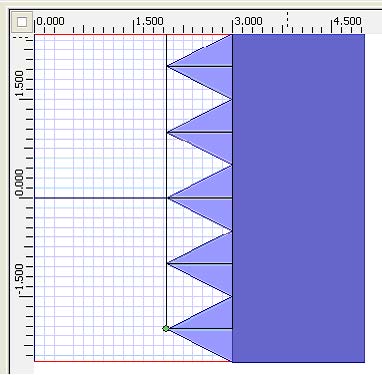
FDTD - Figure 10 Observation components of projectFDTD - Selected Grating layout

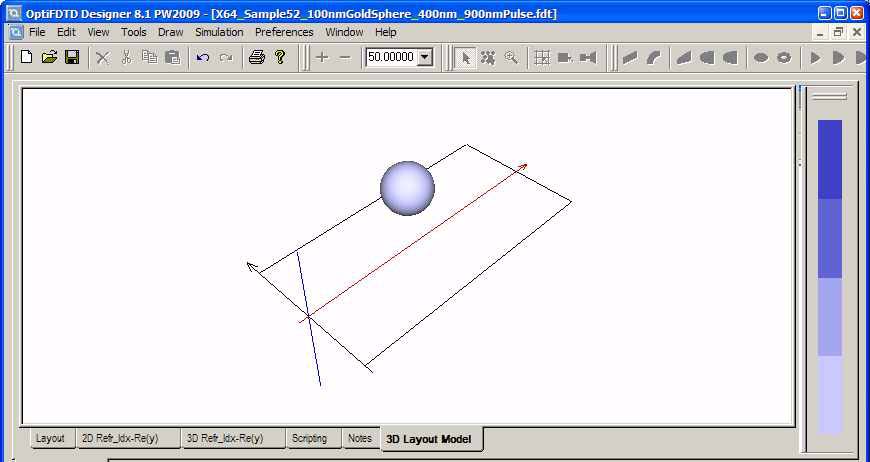
FDTD - Figure 2 Example LayoutFDTD - Figure 1 3D layout mode for sphere

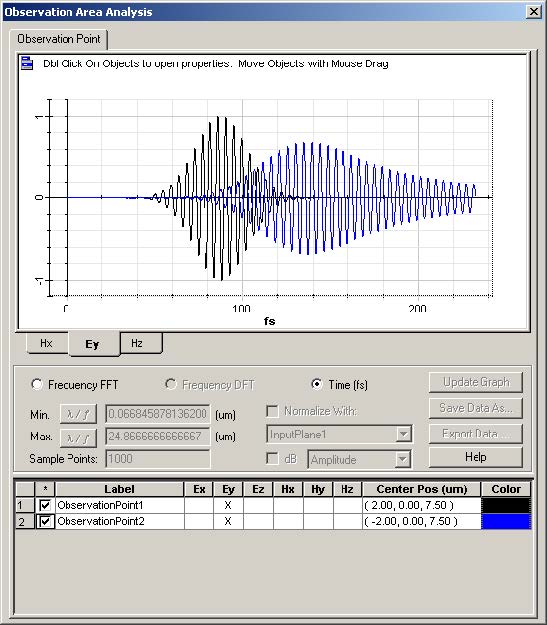
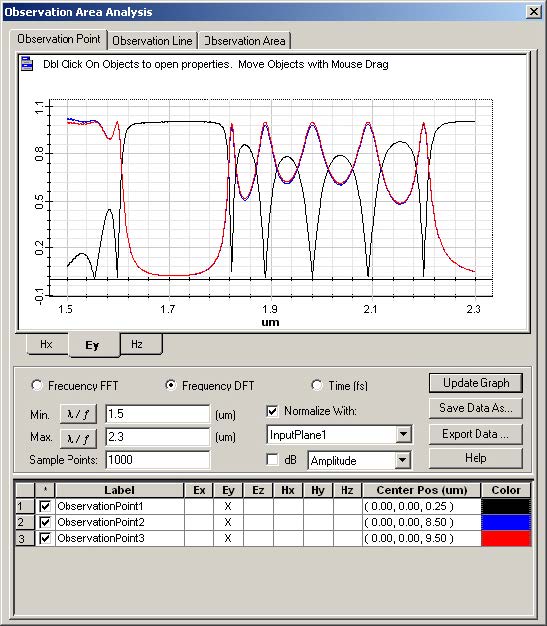
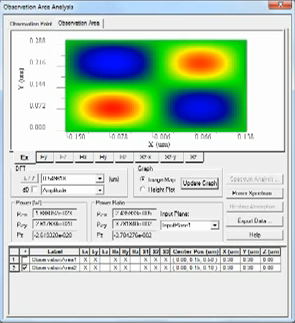
  FDTD - Observation Area Analysis dialog box FDTD - Figure 106 Observation Area Analysis dialog box

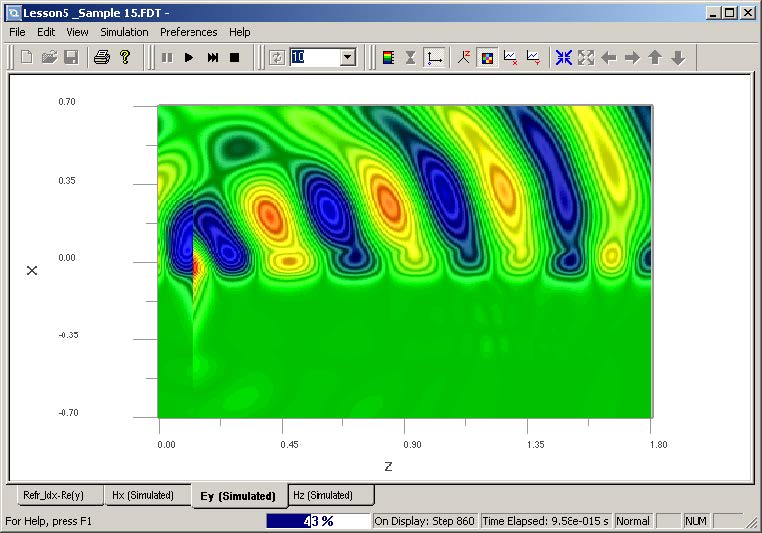
FDTD - Figure 5 OptiFDTD_Simulator FDTD - Figure 40 3D Simulation results

FDTD - Figure 95 PBG layout with new wavepath FDTD - Figure 18 3D Layout

FDTD - Beam size measurement in OptiFDTD(b)

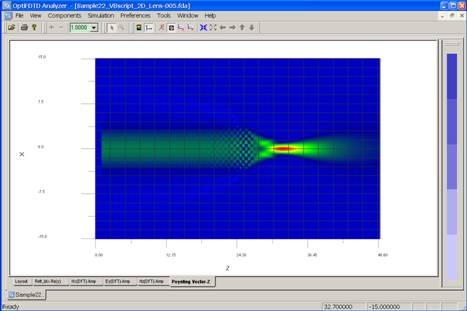
FDTD - Poynting vector for Fiber lens  FDTD - Surface wave propagation model

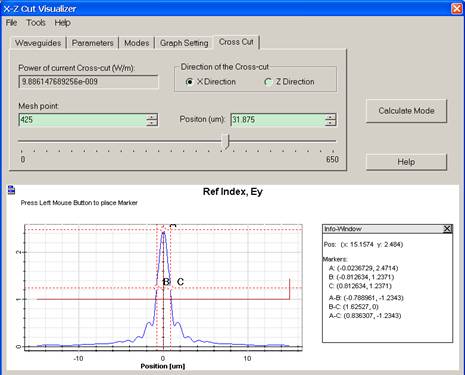
FDTD - Power transmission ratios and normalised powersFDTD - Near field in slice viewer

FDTD - Photonic Crystal Layout FDTD - Diffraction Grating 3D Layouts

Layout in OptiFDTD  Directional grating Coupled waveguide in OptiFDTD

Layout in OptiFDTD  FDTD - Nanoparticle plane wave and the nanoparticle intensity

Related:

F6flpyx64 Intelr Vmdzip 12th Gen Top Work -

Given the initial string seems to conflate several technical terms, this report aims to provide an overview of what seems to be the primary topics of interest: Intel's 12th gen processors and associated technologies like VMD. If "f6flpyx64" and "zip" refer to specific hardware, software, or firmware components, without more context, their inclusion in a detailed technical report is challenging.

The introduction of the 12th gen Intel Core processors with features like Intel VMD, hybrid core architecture, PCIe 5.0, and DDR5 support marks a significant milestone in processor technology. These advancements not only enhance computing performance but also contribute to more efficient data management and system design. f6flpyx64 intelr vmdzip 12th gen top

The 12th generation of Intel Core processors, codenamed Alder Lake, represents a significant advancement in computing performance and efficiency. Released in late 2021, these processors introduced a hybrid architecture that combines two types of CPU cores: Performance-cores (P-cores) and Efficient-cores (E-cores), aimed at optimizing performance and power efficiency. Given the initial string seems to conflate several